What is focal length?

It’s one of the defining qualities of every lens, but what does it do and why is it important?
One of the first technical terms you’ll encounter in photography is focal length. It’s measured in millimetres and printed on your NIKKOR lens (like 24mm, 50mm, 24-70mm or 200mm), but what does it actually mean and how should you choose a focal length for your images or footage? Let’s break it down in simple, practical ways.
What is focal length?
In a simple lens, made up of one piece of glass at one end and a tube connecting it to a camera, the focal length would be the distance between the lens and the camera’s sensor when a sharp image is created.
In modern lenses with lots of optical glass elements hidden in the barrel bouncing light around, the focal length and the physical length of the lens are not related. The NIKKOR Z 600mm f/6.3 VR S, for example, is less than 300mm in length, half the focal length of the lens.
‘Prime’ lenses have one fixed focal length, such as 24mm, 50mm or 85mm, whereas zoom lenses have a variable focal length, such as 24-70mm or 70-200mm.
The key point of focal length is that it determines how much of a scene your camera captures and how large subjects appear in your image.
- Short focal length (e.g. 18mm) equals wide view; more of the scene fits in
- Long focal length (e.g. 200mm) equals narrow view; subjects appear closer and larger


Why focal length matters
Focal length affects several important aspects of your photo:
1. Angle of view
This is how much of the scene you can see.
- Wide lenses capture more of the environment
- Long lenses isolate smaller portions of the scene
2. Subject size
A longer focal length makes distant objects appear closer. Wildlife and sports photographers use long lenses because they have to stay far away from the action.
Both angle of view and subject size are related, so as angle of view goes down, magnification goes up. (Check out our Focal Length Cheat Sheet for a great visualisation of this.)
Using perspective and compression creatively can add interest to your images and footage. Z9 + NIKKOR Z 180-600mm f/5.6-6.3 VR. Left: 280mm, f/13, 1/250 sec, ISO 2000. Middle: 230mm, f/32, 1/160 sec, ISO 4000. Right: 180mm, f/13, 1/320 sec, ISO 1600. ©Nicolas Jægergård.


3. Perspective and compression
Focal length changes how objects relate to each other in your image from foreground to background.
- Wide lenses exaggerate distance (things look further apart)
- Telephoto lenses compress distance (things appear closer together)
Perspective and compression can be used intentionally and creatively depending on what you want to achieve with your images or footage. For example, faces taken with a wide-angle lens will show distortion in the features, while a landscape taken with a telephoto lens can bring foreground and background together for drama.
Focal length also plays a role in affecting the intensity of bokeh. From left to right: f/2.8, f/6.3, f/13, f/22. Z6II + NIKKOR 24-70mm f/2.8 at 70mm focal length

4. Depth of field
While the aperture (or f-number) of a lens plays the biggest role in depth of field, focal length influences background blur:
- Longer focal lengths tend to create stronger background blur (bokeh)
- Wider lenses keep more of the scene in focus

5. Focal length and crop factor
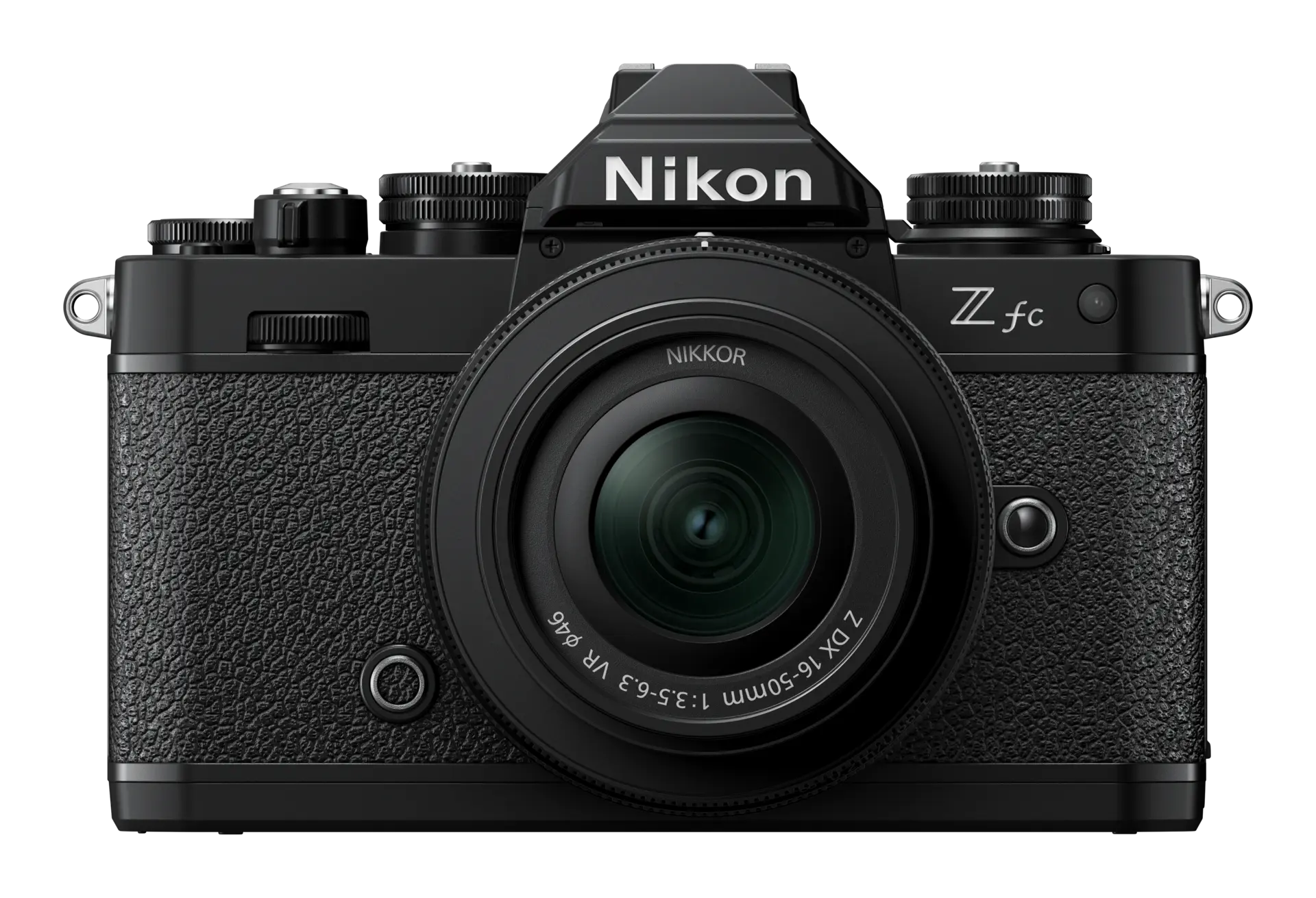
Focal length translates a little differently for lenses on a crop sensor or DX Nikon camera (such as the Nikon Z30, Zfc or Z50II), because the sensor on these cameras is 1.5 times smaller than a ‘full-frame’ FX sensor. So, for example, if you put a 50mm lens on a DX camera you will get an image with an angle of view and magnification similar to a 75mm lens on an FX camera (because 50 x1.5 = 75).
Common focal lengths and what they’re good for
Here are some of the most commonly used focal lengths and how photographers and videographers typically use them:


Ultra-wide (8-24mm)
Best for:
- Landscapes
- Architecture
- Dramatic, creative frames
Look:
- Very wide field of view
- Strong perspective distortion
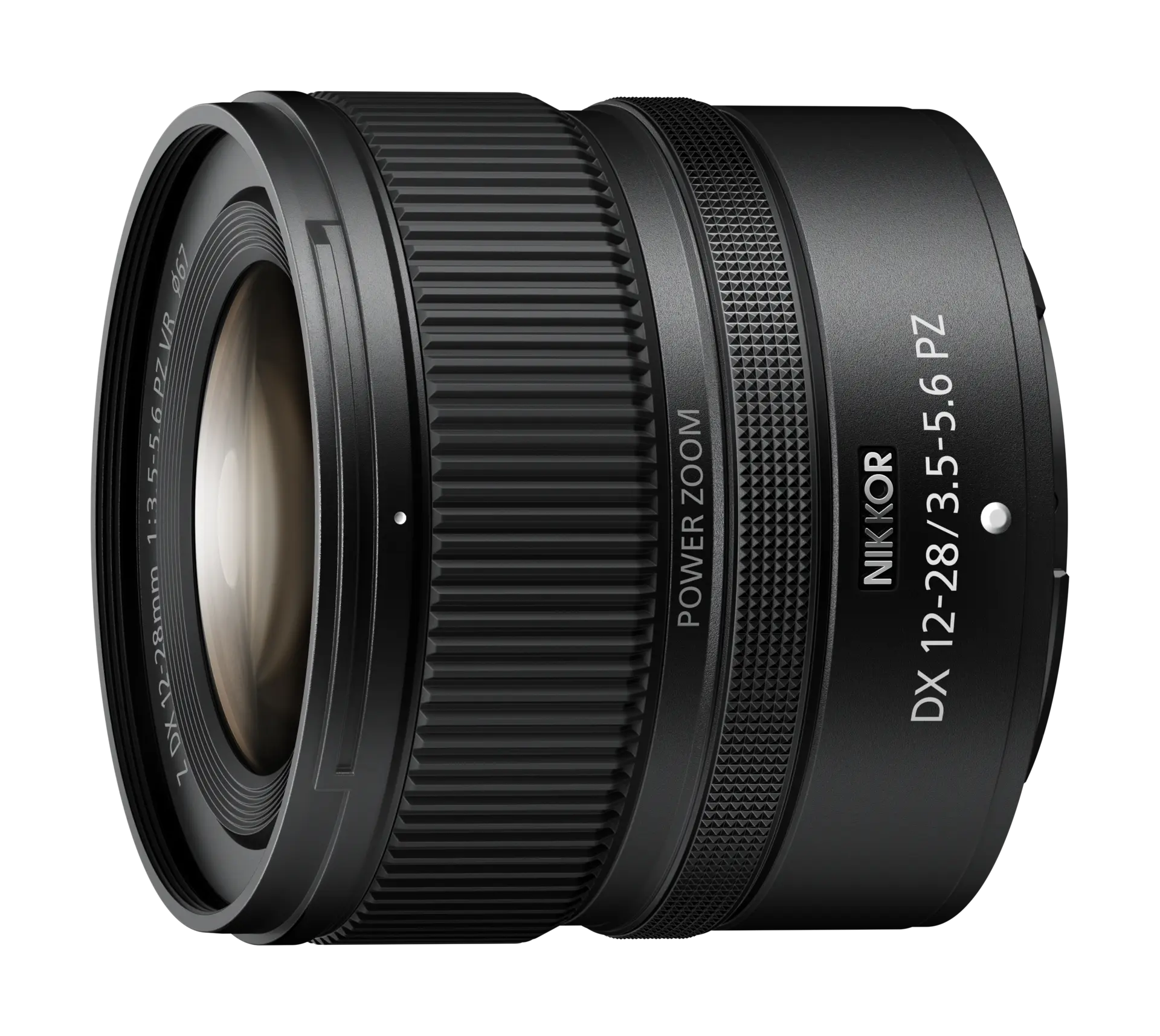
Try: NIKKOR Z 20mm f/1.8 S, NIKKOR Z 14-30mm f/4 S, NIKKOR Z 17-28mm f/2.8, NIKKOR Z DX 12-28mm f/3.5-5.6 PZ VR, NIKKOR Z 24mm f/1.8 S


Wide angle (24-35mm)
Best for:
- Street photography
- Travel
- Environmental portraits
Look:
- Natural but still wide
- Great for storytelling with context
Try: NIKKOR Z DX 24mm f/1.7, NIKKOR Z 26mm f/2.8, NIKKOR Z 28mm f/2.8, NIKKOR Z DX 16-50mm f/3.5-6.3 VR, NIKKOR Z DX 35mm f/1.4


Standard (35-70mm)
Best for:
- Everyday photography
- Portraits
- Cinematic video
- Weddings
Look:
- Closest to how the human eye sees
- Balanced and natural perspective
Popular choice: a fast 50mm lens is often called the ‘nifty fifty’ for its usefulness, while a 24-70mm zoom lens that covers a lot of focal lengths is a really flexible tool.
Try: NIKKOR Z 40mm f/2, NIKKOR Z 35mm f/1.8 S, NIKKOR Z 50mm f/1.8 S, NIKKOR Z 28-75mm f/2.8


Telephoto (70-200mm)
Best for:
- Portraits
- Weddings
- Subject isolation
- Tight photos and close ups in video
Look:
- Flattering compression for faces
- Soft, blurred backgrounds
Try: NIKKOR Z 70-180mm f/2.8, NIKKOR Z 85mm f/1.8 S, NIKKOR Z 135mm f/1.8 S Plena, NIKKOR Z 70-200mm f/2.8 S, NIKKOR Z DX 50-250mm f/4.5-6.3 VR


Super-telephoto (300mm+)
Best for:
- Wildlife
- Sports
- Distant subjects
Look:
- Strong compression
- Very narrow field of view
Try: NIKKOR Z 180-600mm f/5.6-6.3 VR, NIKKOR Z 100-400mm f/4.5-5.6 VR S, NIKKOR Z 400mm f/4.5 VR S, NIKKOR Z 600mm f/6.3 VR S
A quick way to choose
If you’re unsure where to start but know where your interest lies, here are a few focal length suggestions.
- Travel/everyday: 24-70mm zoom, 35mm or 50mm prime
- Portraits: between 50-135mm
- Landscapes: 16-35mm
- Wildlife/sports: 200mm+
Start experimenting
Focal length isn’t just a technical number, it’s a creative tool, shaping how your viewer experiences a scene, from how close they feel to your subject to how space and depth are perceived. Once you understand what different focal lengths bring to your stills or footage, you’ll start choosing lenses based not just on convenience, but on the story you want to tell.
More in Technology and Know-how


Featured Products

'%3e %3ccircle cx='453' cy='453' r='263' fill='%23FFDD00'/%3e %3c/g%3e %3cdefs%3e %3cfilter id='filter0_df_5839_100698' x='0' y='0' width='906' height='906' filterUnits='userSpaceOnUse' color-interpolation-filters='sRGB'%3e %3cfeFlood flood-opacity='0' result='BackgroundImageFix'/%3e %3cfeColorMatrix in='SourceAlpha' type='matrix' values='0 0 0 0 0 0 0 0 0 0 0 0 0 0 0 0 0 0 127 0' result='hardAlpha'/%3e %3cfeOffset dy='1.66516'/%3e %3cfeGaussianBlur stdDeviation='0.832579'/%3e %3cfeComposite in2='hardAlpha' operator='out'/%3e %3cfeColorMatrix type='matrix' values='0 0 0 0 0 0 0 0 0 0 0 0 0 0 0 0 0 0 0.25 0'/%3e %3cfeBlend mode='normal' in2='BackgroundImageFix' result='effect1_dropShadow_5839_100698'/%3e %3cfeBlend mode='normal' in='SourceGraphic' in2='effect1_dropShadow_5839_100698' result='shape'/%3e %3cfeGaussianBlur stdDeviation='95' result='effect2_foregroundBlur_5839_100698'/%3e %3c/filter%3e %3c/defs%3e %3c/svg%3e)


New to Nikon?


Unlock greater creativity